The School of Social Work leads the profession in teaching, research, innovation, collaboration and service.

Ranked #1 in the Nation Since 2012

By U.S. New & World Report

Upcoming Events

June 18, 2026

U-M Campus Partners Juneteenth Luncheon

Join us as BEAM collaborates with 

June 18, 2026

Community Conversation: Civil Rights Protections in the Workplace

Please join us for a conversation about the Equal Employment Opportunity Commission’s recent plan to discontinue the collection of certain workplace discrimination data from employers.

June 23, 2026

Community Conversation: Doom Scrolling, Burnout, and Mental Health

In a world of constant notifications, endless scrolling, and nonstop information, many people feel overwhelmed by the emotional weight of the digital age. Doom scrolling and the pressure to always stay connected can contribute to stress, anxiety, burnout, and emotional exhaustion.

June 29, 2026

Community Conversation: The Job Application Process

We invite you to a Community Conversation around The Job Application Process on Monday, June 29 at noon

All Events

Academic Calendar

Full academic calendar

Artwork at the SSW

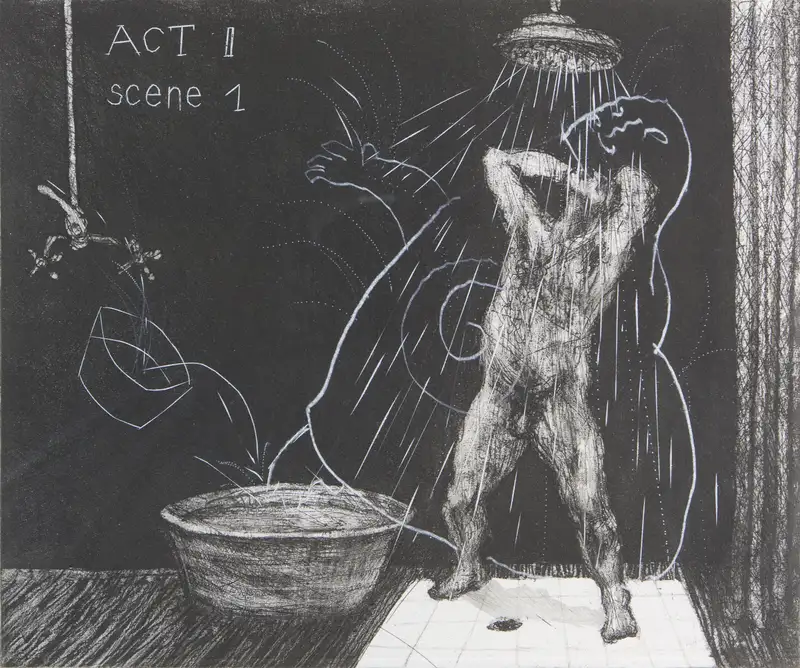
UBU Tells the Truth

William Kentridge (South Africa) , b. 1955

1996–97
A series of eight prints combining etching, aquatint, and drypoint Published by The Caversham Press, Balgowan, KwaZulu-Natal
Act V, Scene 4
98.26.1–8

SSWB 2734

William Kentridge was a young white man in South Africa during the growth and intensification of Apartheid, an institutionalised system of racial segregation, discrimination, and ultimately horrific violence. The population was legally divided into four racial groups, mixed marriages were prohibited, places of residence were determined by racial classification, employment for non-whites was restricted and poorly compensated. Apartheid legislation was abolished in 1991 and multiracial elections were held in 1994 after which the new National Assembly elected Nelson Mandela president. In 1996 the Truth and Reconciliation hearings began. This is the context in which the eight prints in this series were created and the history they address.

Several unique features of Kentridge’s practice are found in this series. Notably Kentridge creates and develops characters over decades of work, these character emerge from and represent the political climate of South Africa, and the content demonstrates the multiple, ambiguous and sometimes contradictory aspects of human nature and our history. Here we see two characters important to Kentridge. Felix Titlebaum, a kinder alter-ego to the more corrupt figures in his pantheon and perhaps a projection of Kentridge, himself, is shown nude and subsumed by the outline of Ubu Roi (right), a figure from a late-nineteenth century absurdist play by Alfred Jarry. In the 1970s, Kentridge saw a production of Jarry’s play. In 1997 he directed Jane Taylor’s Ubu and the Truth Commission and made a short film based on the character Ubu a greedy, sadistic, gluttonous, murderous apartheid police officer. The play, the film, and these etchings, mirror both the chaos of Jarry’s play and incorporate testimony from the Truth and Reconciliation Commission. In these prints, Ubu is a giant, ghostly parasite enveloping Felix as the atrocities of Apartheid enveloped the culture of South Africa. Good and bad, generosity and barbarity, justice and chaos coexist. Like the Romantic artist Francisco Goya who felt and conveyed the anarchic and unspeakable depths of the Napoleonic wars in a manner that still speaks to us, Kentridge captures those elements from late 20th century culture.