The School of Social Work leads the profession in teaching, research, innovation, collaboration and service.

Ranked #1 in the Nation Since 2012

By U.S. New & World Report

Upcoming Events

June 18, 2026

U-M Campus Partners Juneteenth Luncheon

Join us as BEAM collaborates with 

June 18, 2026

Community Conversation: Civil Rights Protections in the Workplace

Please join us for a conversation about the Equal Employment Opportunity Commission’s recent plan to discontinue the collection of certain workplace discrimination data from employers.

June 23, 2026

Community Conversation: Doom Scrolling, Burnout, and Mental Health

In a world of constant notifications, endless scrolling, and nonstop information, many people feel overwhelmed by the emotional weight of the digital age. Doom scrolling and the pressure to always stay connected can contribute to stress, anxiety, burnout, and emotional exhaustion.

June 29, 2026

Community Conversation: The Job Application Process

We invite you to a Community Conversation around The Job Application Process on Monday, June 29 at noon

All Events

Academic Calendar

Full academic calendar

Artwork at the SSW

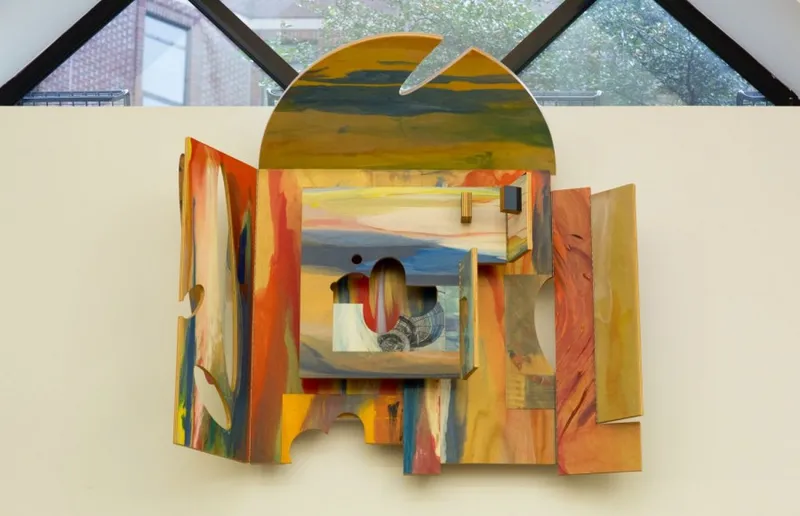
The Real Blue

Sam Gilliam , American, b. 1933-2022

1998
Acrylic on birch plywood

SSWB Lower Level Atrium

Since the 1960s Sam Gilliam has re-imagined painting. Gilliam is known as the artist who took canvas off the stretcher, a color field artist who saturated unprimed canvas with paint and draped this cloth on interior walls, above aisles in churches, on the exterior of museums. Color and the shape of the draped canvases are the subject of his work. Some viewers do not see this as sufficient. Because Gilliam is a black artist who came of age during the civil rights movement, the expectation for his work was narrative or symbolic art about his identity. Throughout his life he has struggled, however, to keep his work from being defined by race. In 1971, he pulled out of an exhibition of work by black artists because he saw it as a form of tokenism, not valuing the individual qualities of the artists. Rather than being motivated by politics or what other people believe he ‘should’ do, he has been inspired by everything from his life including the books he has read, his travel, artists who came before him, and jazz.

Gilliam’s The Real Blue is a four-piece installation commissioned for the School of Social Work’s lower level and is a centerpiece of its original art collection. Instead of canvas, Gilliam used painted wood for this piece, a medium he used for some installations in the 1980s and 90s. In spite of its solidity, the effect is similar to his draped canvases. In both wood and cloth, Gilliam gives paint shape and volume. Rather than flat decoration, he turns it into a material component and corporeal enhancement of the room. Note how individual parts of this site-specific piece incorporate shapes from the room and some mimic architectural details: hinged wings take the shape of the octagonal wall angles while cut-out red and yellow arches recollect the windows between the floors. By placing the four sections of this work on separate walls and at the juncture of the lower level and first floor, within and across from windows, visitors interact with it from many vantage points.