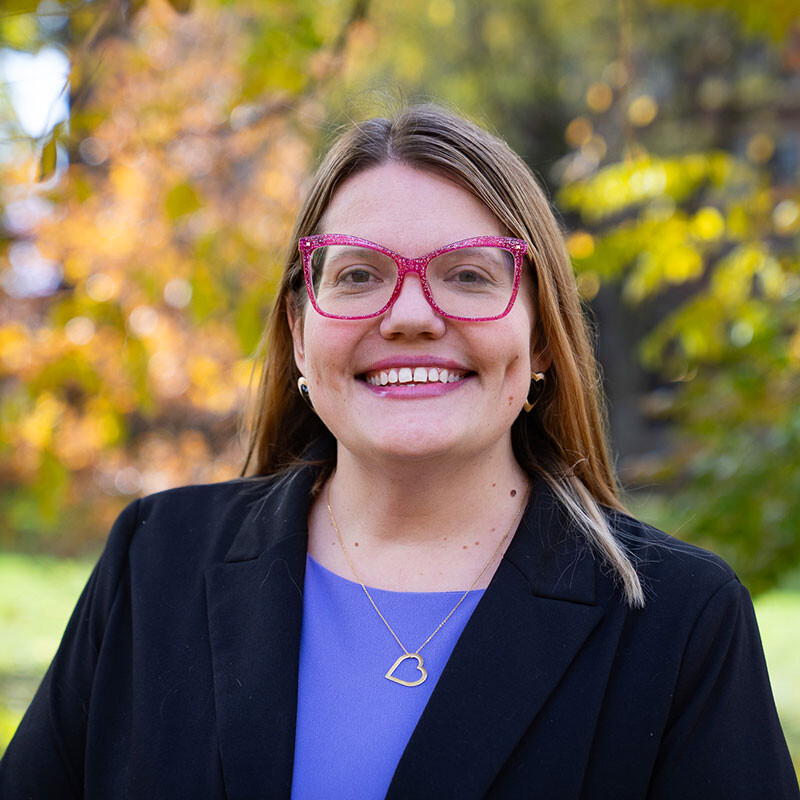
On March 12, 2025, Professor Katie Edwards received a letter that one of her research grants was being terminated by the National Institute of Health (NIH). “I will never, ever, forget that day,” said Edwards. “A million things go through your mind, and one of the first was ‘Oh my God, our participants, our communities. Oh my God, my staff aren’t going to have jobs.’” Then Edwards received another letter terminating another grant. And then the floodgates opened.
Following President Trump’s inauguration in January 2025, his new administration swiftly initiated major changes and cuts to research funding, particularly on projects involving diversity, equity and marginalized communities.
These changes affected Edwards’ work – all of her work.
Edwards’ career has been focused on preventing and responding to sexual and related forms of violence among minority and vulnerable populations. She leads U-M’s Interpersonal Violence Research Laboratory, which employs about 50 staff members on a variety of projects working with Indigenous youth and families as well as LGBTQ+ youth across the country. That focus put her work directly under scrutiny. By the end of April, Edwards would have 10 grants terminated — eight from the NIH and one each from the National Science Foundation (NSF) and the Department of Education (DOE).
In response, Edwards joined Protect Democracy and the ACLU’s lawsuit against the NIH as one of four named plaintiffs (the suit also represented many more researchers through professional organizations, including the American Public Health Association).
“Initially, it took so much to wake up each day and keep going. I felt like everything I had worked towards during my whole life was completely coming under attack and being obliterated, but I grew a lot stronger in the process. So much of that came from the support of the community: family, friends, other PIs and from the attorneys supporting the lawsuit.
“When this all happened, I was just devastated. Around that time, an LGBTQ+ Elder said to me, ‘Katie, we fought through oppression before, and we can fight through it again.’ And I literally tell myself that every day.”
Ultimately, the lawsuit was successful. Edwards secured the funding to reinstate those eight NIH projects and is now working to get those projects back on track. (She does not expect to ever recover the NSF and DOE funding.)
“I’m deeply grateful that I had the opportunity to participate in this lawsuit, and that we were able to get all of our terminated NIH grants back. But even those are still at risk for being re-terminated; they’re not 100% stable. I wake up every day just hoping that we get to keep our grants today. So, this doesn’t feel like a huge victory, more like justice at this moment. We have our funds, but we have a lot more to do to keep public health and social justice oriented research on track and to figure out how to prevent this from ever happening again.
“We can’t give up. We have to keep going. We need social workers out there as clinicians, as activists, as researchers more than ever.”
Edwards and her team have largely pivoted toward working with private donors and foundations for their work specific to minority populations. “We aren’t doing anything that’s going to sacrifice our integrity or values, and I’m not going to stop. Nothing will ever stop us from doing this work.”