Trina R. Shanks
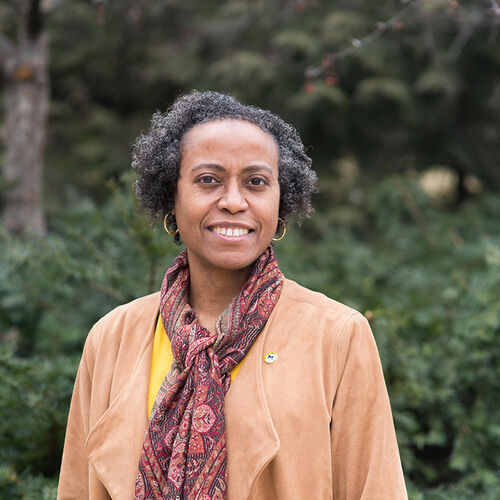
Dr. Shanks’ research interests include the impact of poverty and wealth on child well-being; asset-building policy and practice across the life cycle; and community and economic development. As Director of the Center for Equitable Family and Community Well-Being, she continues ongoing research and intentionally seeks and responds to new opportunities that will empower families and communities to thrive.
Since 2018, she has overseen the School’s strategic goal of community engagement and leads the evolving ENGAGE team that promotes, coordinates and facilitates greater impact in community and social justice. Shanks also serves as faculty advisor to the New Leaders in African-Centered Social Work Program. She has also been a research investigator for the Saving for Education, Entrepreneurship, and Downpayment (SEED) demonstration program and consults with several other child savings account initiatives, including one started in Lansing Public Schools.
As a faculty affiliated with the Technical Assistance Center funded by the Skillman Foundation, over a ten-year period Trina Shanks was actively engaged in six Detroit communities as part of the Good Neighborhoods program. She also has conducted multiple evaluations of Detroit’s Summer Youth Employment Program—Grow Detroit’s Young Talent.
From 2010 to 2012 Shanks was appointed by Michigan Governor Granholm to serve two years on the State Commission on Community Action and Economic Opportunity. She is currently one of the national network co-leads for the Social Work Grand Challenge: Reversing Extreme Economic Inequality and a non-resident fellow at the Urban Institute.
Shanks earned a PhD in Social Work from Washington University and an M.S. in Comparative Social Research from the University of Oxford as a Rhodes Scholar.
Patrick J. Meehan

Patrick Meehan, MSW 2011, has over five year’s experience evaluating youth programs in Chicago and Detroit, including programs on early language acquisition, health and nutrition, and youth employment. His expertise centers primarily on conceptually mapping evaluation outcomes, developing instruments to test for desired outcomes, and managing and analyzing data.